In Pilates, sometimes a single centimetre is enough to change the quality of an entire exercise. This is not about perfection, ideal positions or mechanically reproducing movements. It is about experiencing the true essence of Joseph Pilates’ method. Authentic Pilates is not about performing one exercise after another without understanding what is happening in the body. It is an intelligent system in which body alignment, hand and foot placement, as well the apparatus set up like height, distance and spring resistance & attachment all matter. Sometimes a small adjustment makes movement more natural, fluid and understandable.
“Precision in Pilates is not the pursuit of perfection. It is the art of finding movement in which the body works consciously, functionally and harmoniously as a whole.”
A good correction is not about making a person fit an ideal picture of an exercise. It is about preparing the position and guiding the movement so the practitioner can achieve its purpose without unnecessary compensation. That is the difference between correcting a shape and teaching quality.
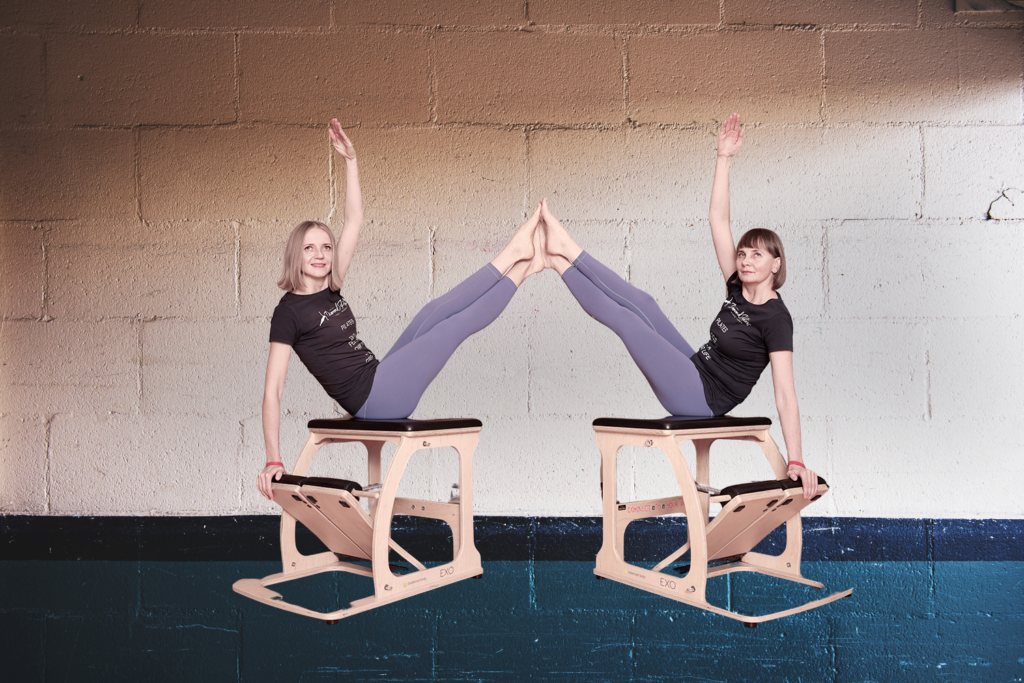
Perfection is often associated with an ideal-looking position, regardless of a person’s abilities. Precision means consciously seeking the setup and execution that allow the body to work as effectively as possible. We differ in proportions, limb length, joint mobility, strength, coordination and movement experience. Two people doing the same exercise may therefore need different settings. On the Cadillac, the spring attachment height may need to change according to shoulder height of the practitioner and the purpose of the exercise. On the Reformer, the foot-bar , strap length, carriage position and spring selection matter. On the Wunda chair, pedal resistance, hand/foot placement and body alignment on the apparatus all count. These are not insignificant details: they often determine the quality of movement.
Imagine someone sitting on the mat with straight legs. For many people, maintaining an elongated spine and a comfortable pelvic position is challenging. One person leans back, another bends forward, and another stiffens the shoulders. Is it enough to say, “Straighten your back”? No. The instructor needs to identify what makes the position difficult. A small lift beneath the pelvis, slightly bent knees or a different variation may help. The goal is not to force an ideal shape, but to create the conditions for good movement. If the starting position does not offer the body the right possibilities, the subsequent phases are unlikely to unfold well.
Good movement is whole-body integration: a sense of cooperation, flow, control and freedom. The practitioner begins to understand where the movement starts, where it is going and what happens along the way. Confidence does not come solely from the instructor’s praise; it also arises from within. The body works as a whole, and the effort has direction and meaning. The point is not merely to complete the movement, but to understand and guide it consciously.
During Footwork, the practitioner sits on the Wunda chair and presses the pedal with the feet against spring resistance.
With unsuitable resistance, the torso may tip forward or backward, or the shoulders may tense. The pedal moves, but has the intended result been achieved? Not necessarily. The same applies to the exercises Press Back, when the practitioner sits with their back to the pedal and places their hands on it. If the spring resistance is too strong, they may try to move the pedal by excessively leaning through the back rather than initiating movement through well-organised action at the hips and pelvis. The instructor must know where movement should begin, how to position the practitioner and how to phrase the cue. Sometimes a verbal cue is enough; sometimes the springs need adjusting; sometimes a right hands-on correction is helpful.
A practitioner may assume an excellent starting position and initiate movement correctly, then lose its organisation. In an exercise the Twist involving torso rotation, the initial twist may be sound, but as rotation deepens and the spine articulates, the connection between pelvis, torso and shoulders can easily be lost. The instructor must observe not only the beginning but also the development of the movement and the conscious return.
Springs do more than increase difficulty. Depending on the direction of force and apparatus setup, they can resist movement, assist a particular phase and provide feedback. As a spring stretches, we learn to control increasing tension.
On the return, we do not allow it to pull the body passively back to the starting point; we progressively manage the decreasing tension while maintaining length and organisation. Learning to cooperate with the apparatus is one of Pilates’ most valuable lessons.
Knowing the sequence of exercises on the Reformer is not the same as knowing how to teach. Two beginners may need different emphases: one may require greater pelvic control, another work on the shoulder girdle or coordination.
Both train the whole body, but an experienced instructor selects exercises, variations and intensity through observation rather than mechanically ticking items off a list.
Precise teaching requires knowledge of the method, functional anatomy, biomechanics and progression, as well as experience, observation and clear communication. The client should not remain a passive recipient of instructions. They learn to recognise signals from their body and say, “I feel more stable in this position,” or “With this setup, I understand the movement better.” Such feedback enables genuine cooperation.
Sometimes moving a hand, changing a support or adjusting strap length allows the entire body to work together. Not because we have found a geometrically perfect position, but because we have discovered a setup suited to this particular person. We do not merely teach movements. We teach people to understand their bodies and find harmony between strength, control, mobility and freedom.
In Pilates, every centimetre matters. But what matters even more is what those centimetres help us feel and understand.
Written by Ilona Włodarczyk Pilates Master Teacher Authentic Pilates. Conscious movement. Continuous growth.